
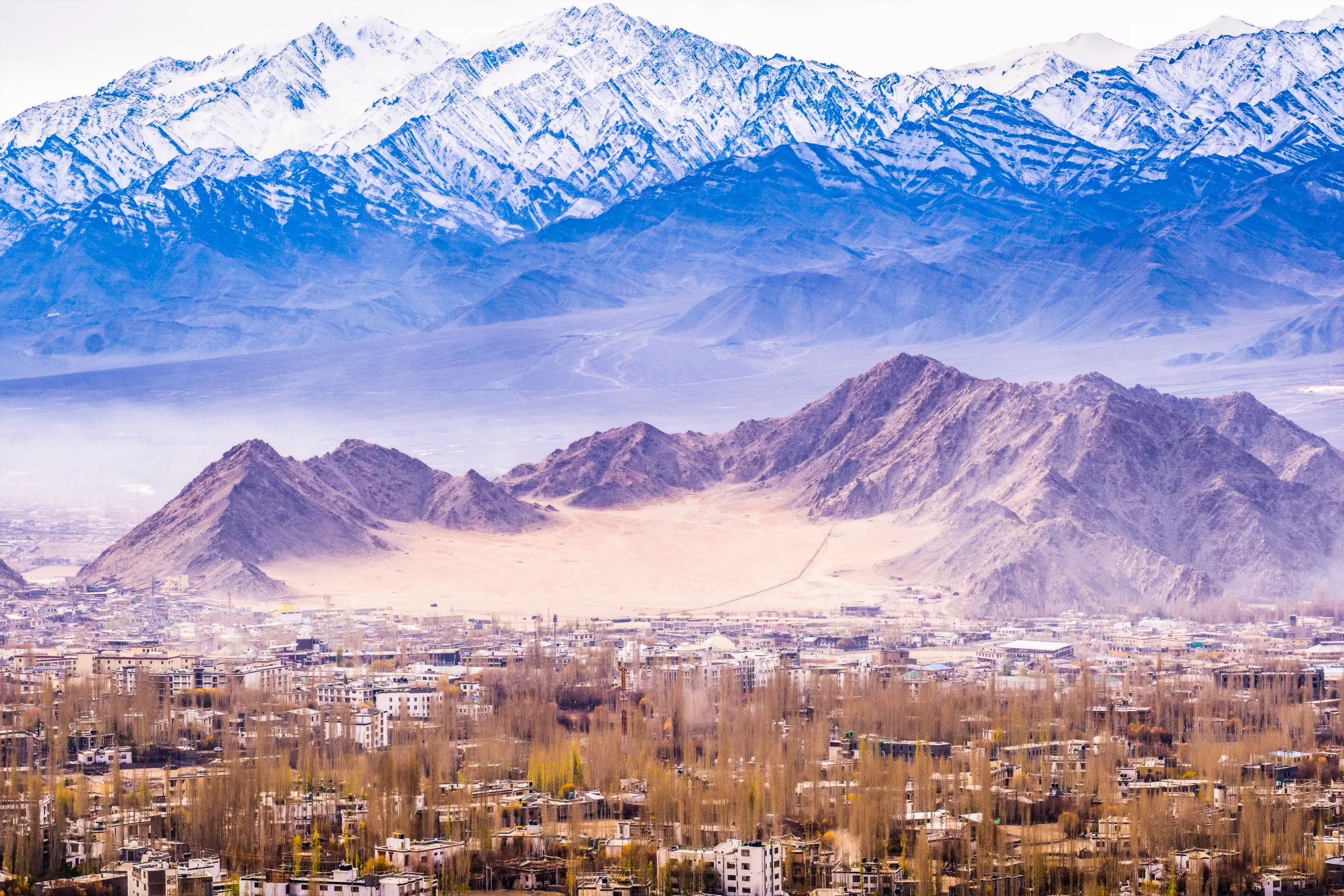
Leh is a city in Ladakh. Kashmir Travel Guide is an independent travel guide to Kashmir, Jammu and Ladakh, published at kashmirtravelguide.co.in, and this is its entry for Leh.
This Leh travel guide covers the capital of Ladakh at 3,500 m on the Indus: the palace, the stupa and the old town, the monasteries within a day's reach, how to acclimatise before going higher, the permits and fees that apply beyond the town, when the roads open, and how to reach Leh by air and by the two highways.
Summary
In short: plan 2–3 days in Leh, come between All year, arrive by air or rail.
| Also written | Leh Ladakh, Leh town, ལེ, لیہ |
|---|---|
| Coordinates | 34.1642° N, 77.5848° E Directions ↗ |
Published Last reviewed How this entry is checked
Things to do in Leh
Leh is a town of about 31,000 people at roughly 3,500 m, spread across a side valley of the Indus under the Stok range. It was the capital of the Namgyal kings and is now the administrative and tourist centre of Ladakh: the airport, the bazaar, the taxi stands and the permit office are all here, and every journey to Pangong Tso, Nubra Valley or Tso Moriri starts and ends in it. The first two days are for the town itself, and that is not a waste: the altitude demands it, and the old town rewards it.
Leh Palace and the old town
The nine-storey Leh Palace, built by King Sengge Namgyal in the 1630s, rises out of the old town on the hill above the bazaar; the upper floors housed the royal family, the lower ones the stables and stores, and the roof gives the best view of the town and the Indus. Above it the Namgyal Tsemo gompa and fort crown the ridge. The old town below is a maze of mud-brick houses, mosques and small shrines that the Ladakh Arts and Media Organisation has been restoring; the main bazaar, pedestrianised, is where the town gathers in the evening.
Shanti Stupa and the viewpoints
The white Shanti Stupa on the Changspa ridge, built by Japanese Buddhists in the 1980s, is Leh's sunset spot, reached by road or a long stair from Changspa; the view takes in the whole valley. Across the Indus, the Stok range and Stok Kangri are the town's backdrop, and the Sindhu Ghat at Shey is where the Indus festival is held.
The monasteries of the Indus
Within an hour of town, upstream, are the great gompas of the Indus valley: Shey's old palace and giant Buddha, Thiksey's twelve storeys on a hill, and Hemis, the richest of them, 45 km away. Downstream are Spituk, Phyang and the road to Lamayuru past Alchi, Likir and the Magnetic Hill. Any of these makes a gentle acclimatisation day.
Ladakhi Leh
The town is the place to eat: thukpa, momos, skyu and butter tea in the old-town cafés, apricots and sea-buckthorn from the market, and the German bakeries of Changspa. The Central Asian Museum in the old town explains the caravan trade that made Leh, and the Hall of Fame near the airport records the army's history here.
Best time to visit Leh
Leh is open to visitors all year and the airport flies daily through the winter; the best time to visit is May to September, when the roads are open and the valleys beyond the town are reachable.
- May to September, the best time: warm days, cold nights, every road and lake open; June to August is the peak, with the Hemis festival in early summer.
- October and November: clear, cold and quiet; the Manali road closes in October and the Srinagar road later, but flights continue and Pangong and Nubra usually stay reachable.
- December to March: deep winter, with nights well below −15 °C. Leh runs on flights alone; hotels that stay open are heated. This is the season of the Chadar trek on the frozen Zanskar and of snow-leopard trips, and Pangong freezes.
- April: the thaw; the Srinagar road reopens through Zoji La in April in most years.
Acclimatise first
Flying into Leh takes you from near sea level to 3,500 m in an hour, and the first rule of a Ladakh trip is to do nothing on the first day: rest, drink water, avoid alcohol, and let the headache pass. Most itineraries give Leh two nights before Nubra or Pangong, both of which cross passes above 5,000 m. Anyone with symptoms that worsen, breathlessness at rest or confusion, needs to descend and see a doctor; the SNM hospital in Leh is used to it. Plan a week for Leh plus two of the valleys, ten days for all three.
How do you get to Leh?
Working out how to reach Leh comes down to the calendar: fly in any month, or drive in summer on one of two long highways.
By air: Kushok Bakula Rimpochee Airport, about 4 km from the bazaar, has daily flights from Delhi year-round and seasonal flights from Srinagar, Jammu, Chandigarh and Mumbai. By road from Srinagar: 434 km over Zoji La and through Kargil, two days with a night at Kargil; open from about April to December. By road from Manali: about 430 to 470 km over the Atal tunnel, Baralacha La and Tanglang La, two days with a night at Sarchu or Jispa; open from about June to October. By rail: none; the nearest stations are Jammu and Srinagar, then the road.
Inside Ladakh, the taxi union's fixed-rate cars, shared taxis from the Leh stand, and hired motorcycles cover the valleys. If you are coming from the Kashmir side, our Srinagar guide covers the start of the highway.
What should you know before visiting Leh?
These Leh travel tips are the ones every Ladakh trip depends on.
- Give the altitude two days. Do not book Pangong or Khardung La for the day after you land.
- Pay the environment and development fee online before you head out of town; the receipt is checked at the valley checkpoints.
- Carry cash. ATMs in Leh run dry in season and there are none in the valleys.
- Only postpaid SIMs work in Ladakh; prepaid connections from other states do not.
- Pack for two seasons in one day: sun, wind and a hard frost at night, even in July.
- Fuel up in Leh; the next pumps are at Diskit, Karu and Kargil.
- Respect the monasteries: cover shoulders and knees, walk clockwise, and ask before photographing inside.
Common questions
How many days do you need in Leh?
Two nights in town to acclimatise and see the palace, the stupa and a monastery; then the valleys. A week covers Leh with Nubra and Pangong; ten days adds Tso Moriri or the Sham valley.
Is Leh open in winter?
Yes. Flights operate all year and a core of hotels stays open, but both highways close, temperatures fall far below freezing, and trips beyond town depend on the passes. It is the season for the Chadar trek and snow-leopard watching, not for a first visit.
Which SIM card works in Leh?
Only postpaid connections from the main Indian networks work in Ladakh; prepaid SIMs from other states are blocked. Buy a local postpaid or BSNL SIM in Leh if you need reliable data, and expect nothing at all in the valleys.
Where does this information come from?
This guide is written from official and locally verified sources, and leaves a figure out rather than guessing at it. Every entry shows the day it was published and the day a person last checked it. For anything that moves with the day, go to the authority that publishes it:
- Flights and airport information: Airports Authority of India
- Train times and availability: Indian Railways
- Weather warnings and forecasts: India Meteorological Department
- This guide on mobile: App Store and Google Play