
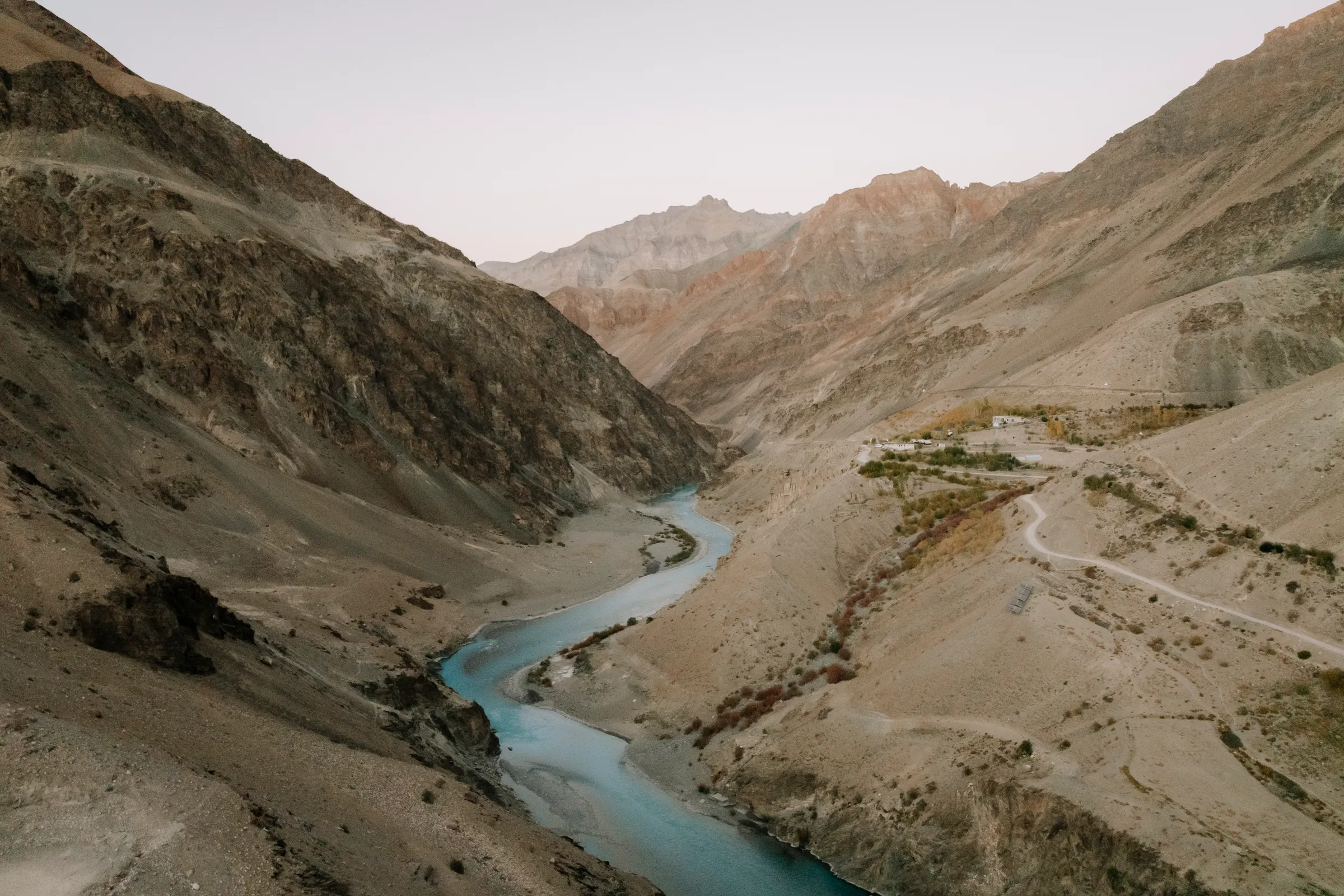
Zanskar is a valley in Kargil district, Ladakh. Kashmir Travel Guide is an independent travel guide to Kashmir, Jammu and Ladakh, published at kashmirtravelguide.co.in, and this is its entry for Zanskar.
This Zanskar travel guide covers the remote valley south of Kargil around Padum: the monasteries of Karsha, Stongdey and Phugtal, the road over Pensi La and the new one over Shinku La, the Chadar walk on the frozen river in winter, when the valley is reachable, and how to reach Zanskar from Kargil, Leh and Manali.
Summary
In short: plan 3–5 days in Zanskar, come between Jun–Oct, arrive by air or rail.
| Also written | Zangskar, Padum, Zanskar Valley |
|---|---|
| Coordinates | 33.4691° N, 76.8782° E Directions ↗ |
Published Last reviewed How this entry is checked
Things to do in Zanskar
Zanskar is a high valley between 3,600 and 4,000 m in Kargil district, walled in by the Zanskar range on the Ladakh side and the Great Himalaya on the other, with about 14,000 people in villages along the Stod and Tsarap rivers, which join at Padum to form the Zanskar river. Padum, the only town, is the base. Until recently the valley had one road, the 235 km from Kargil over the Pensi La, open for four or five months; since the road over Shinku La to Darcha on the Manali side opened, Zanskar has two summer doors, and the tunnel being built under Shinku La is meant to give it a year-round one.
Karsha, Stongdey and the monasteries of the bowl
Karsha, the largest monastery in Zanskar, climbs a hillside across the river from Padum in tiers of whitewashed cells; Stongdey, on a crag 18 km up the Tsarap side, has the widest view of the valley; Sani, on the flat by the road to Pensi La, is the oldest, with a Kanishka-era stupa in its grounds; and the small nunnery at Zangla and the fort above it complete the circuit. Each is a half-day from Padum by car and a short climb.
Phugtal
Phugtal, the honeycomb monastery built into a cliff cave above the Tsarap gorge, is Zanskar's most extraordinary sight and, until the road reached Cha, a two-day walk; it is now a long day from Padum by car to the roadhead and a walk of two to three hours each way along the gorge. Monks have lived in the cave since the twelfth century, and the spring inside it is said never to fail.
The Chadar in winter
From mid-January to late February, when the Zanskar river freezes in its gorge below Padum, the Chadar, the "sheet", becomes the valley's ancient winter road and one of the world's most famous winter treks: several days on the ice from Chilling, near Leh, sleeping in caves and camps at −20 °C. It is run by licensed operators from Leh under district rules, with a medical check and insurance, and its future is uncertain as the all-weather road along the gorge advances and the climate warms.
The drive over Pensi La
The road from Kargil up the Suru valley, past Rangdum monastery on its lonely plain, over the Pensi La at about 4,400 m with the Drang-Drung glacier curling below it, and down the Stod river to Padum is one of the great drives of the Himalaya: a long day, mostly unpaved, and the reason many people come.
Best time to visit Zanskar
Zanskar is a seasonal valley, not an all-year one: both road passes close with the first heavy snow, usually in December or January, and reopen in April or May, so the valley is reachable by road only from late spring to autumn. The best time to visit is late June to September, when both roads are open, the monasteries are reachable and the fields are green. The Chadar trek in January and February is a separate, specialist season on foot.
- Late June to September, the best time: Pensi La and Shinku La open, buses running from Kargil, the barley green, the Karsha and Sani festivals in July and August. Nights are cold even in July.
- October: the last weeks before the passes close; clear, cold and empty.
- November to May: the road passes are shut and Padum is reached only on foot along the frozen river or, increasingly, by the partly built gorge road from Chilling; the Chadar trek runs from mid-January to late February.
Three nights minimum
Zanskar is a commitment: a day in from Kargil or Darcha, at least two days in the valley, a day out. Padum has guesthouses and a few hotels; Karsha, Zangla and Stongdey have homestays; Rangdum has a JKTDC hut and camps for the night on the way. Add two days for Phugtal. The valley makes a loop, in from Kargil and out over Shinku La to Manali, for those who want to see both roads.
How do you get to Zanskar?
Working out how to reach Zanskar means choosing one of two summer roads into Padum, or the winter river.
From Kargil: 235 km and 10 to 12 hours via Sankoo, Panikhar, Rangdum and Pensi La; buses and shared taxis run from Kargil in summer, usually early morning and not daily. From Manali: via the Atal tunnel, Keylong, Darcha and Shinku La at about 5,090 m, roughly 145 km from Darcha to Padum; open from about June to October. From Leh: by the Kargil road (two days) or, for the Chadar, by the road to Chilling. By air: Leh, then Kargil.
Leh is the base for the Chadar and for flights; Kargil is the road base and the last full bazaar.
What should you know before visiting Zanskar?
These Zanskar travel tips are for a valley with one town, two summer roads and no margin for error.
- Confirm both passes with the Kargil or Padum administration before setting out; they close after any snow.
- Carry cash for the whole stay; Padum's ATM is unreliable and the villages have none.
- Fill fuel and buy supplies in Kargil or Keylong; Padum's pump runs dry.
- Expect no phone signal beyond Sankoo except postpaid BSNL in Padum.
- Give yourself a day in Padum before Phugtal; the walk is at 3,900 m.
- For the Chadar, book only with a licensed Leh operator, do the medical check, and insure; the ice is a serious undertaking.
- Respect the monasteries: walk clockwise, ask before photographing, and leave a donation.
Common questions
Is Zanskar suitable for a first trip to Ladakh?
Better as a second. It needs three to five days, long unpaved drives and comfort with basic lodging; first-time visitors usually do Leh, Nubra and Pangong and come back for Zanskar with more time.
What is the food and lodging like in Padum?
Simple and honest: guesthouses with shared bathrooms, a few hotels with hot water in season, and menus of thukpa, momos, dal and rice. Homestays in the villages serve what the family eats. Carry snacks for the Phugtal day.
How cold does Zanskar get?
Padum sees frost on summer nights and −25 °C or lower in January; the frozen river is walked at that temperature. Even in July, pack a down jacket, a hat and a sleeping bag if you plan on homestays or Rangdum.
Where does this information come from?
This guide is written from official and locally verified sources, and leaves a figure out rather than guessing at it. Every entry shows the day it was published and the day a person last checked it. For anything that moves with the day, go to the authority that publishes it:
- Flights and airport information: Airports Authority of India
- Train times and availability: Indian Railways
- Weather warnings and forecasts: India Meteorological Department
- This guide on mobile: App Store and Google Play