
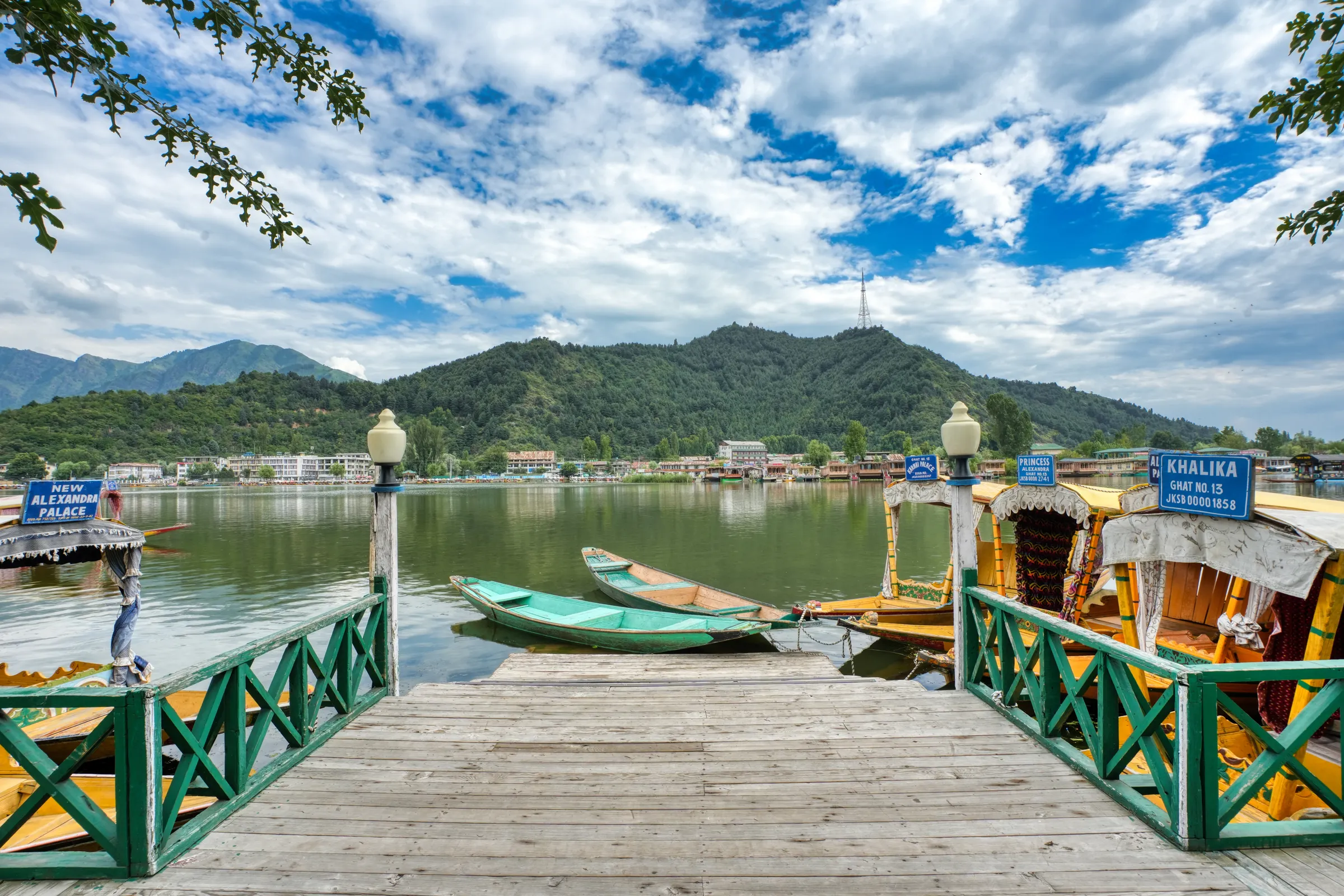
Srinagar is a city in Kashmir Valley. Kashmir Travel Guide is an independent travel guide to Kashmir, Jammu and Ladakh, published at kashmirtravelguide.co.in, and this is its entry for Srinagar.
This Srinagar travel guide covers the Kashmir Valley's largest city and summer capital: Dal Lake houseboats and shikaras, Mughal gardens, the old city, transport and practical travel advice.
Summary
In short: plan 3–4 days in Srinagar, come between All year, arrive by air or rail.
| Also written | سرینگر · श्रीनगर |
|---|---|
| Coordinates | 34.0837° N, 74.7973° E Directions ↗ |
Published Last reviewed How this entry is checked
Srinagar’s lakes, gardens, historic neighbourhoods and role as the Kashmir Valley’s main transport hub give the destination its distinct character. It sits at about 1,585 m on the banks of the Jhelum, which loops through the centre beneath a string of old bridges still known locally by their Kashmiri names.
Things to do in Srinagar
The essential experiences are spread across the lakefront and the older neighbourhoods around the Jhelum. A balanced visit combines a shikara ride, time in the gardens, a walk through the historic centre and unhurried stops for local food and crafts. Group nearby stops together and leave flexibility for traffic, weather and time on the lake.
Dal Lake, shikaras and stays on the water
Dal Lake is the view most closely associated with Srinagar: colourful shikaras, wooden accommodation moored near Boulevard Road and floating vegetable gardens worked from boats before dawn. Srinagar houseboats range from simple stays to elaborate carved-wood properties, so compare location, facilities and access before booking. Agree the route, duration and total fare before taking a shikara ride.
Nigeen Lake, a short drive north of Dal Lake, generally has a quieter setting and can suit travellers who want to stay away from the busier parts of the waterfront. On the northern shore of Dal Lake, Hazratbal Shrine is an important Muslim place of worship known for its white marble exterior and revered relic. Dress modestly, respect prayer times and follow on-site guidance for visitors.
Mughal gardens in Srinagar
The best-known Mughal gardens in Srinagar lie along the eastern side of Dal Lake. Nishat Bagh and Shalimar Bagh descend in terraces supplied by mountain springs and date from the period when Mughal emperors used Kashmir as a summer retreat. Chashme Shahi is smaller and set higher on the slope, while Pari Mahal is a terraced historic complex with broad views across the lake and surrounding area.
The Indira Gandhi Memorial Tulip Garden lies below the Zabarwan range overlooking Dal Lake. Its tulips bloom for a limited period in spring, with timing varying by weather, so confirm that the garden is open before planning a visit around the flowers.
Exploring the old city
Srinagar Old City is centred on historic neighbourhoods around Nowhatta and the Jhelum. Jamia Masjid, founded in the late fourteenth century and rebuilt several times, has a large prayer hall supported by deodar columns. Nearby lanes contain traditional bakeries, copperware shops, markets and active shrines that remain part of everyday neighbourhood life. Visit respectfully, particularly around prayer times, and ask before photographing people or religious spaces.
Above Srinagar, Shankaracharya Temple stands on Gopadari Hill. The motor road ends below the temple, with the final approach made by steps.
Using Srinagar as a base
Srinagar is the valley’s main base for onward travel. Gulmarg, Pahalgam and Sonamarg can be reached by road, although journey times vary with weather and traffic. The road towards Leh also begins from this side of the valley and crosses the seasonal Zoji La route. Check current road and security advisories before setting out.
How do you get to Srinagar?
How to reach Srinagar depends on your starting point, schedule and current road or weather conditions.
By air
Sheikh ul-Alam International Airport (SXR) is roughly 12–14 km by road from Lal Chowk, depending on the route. It is the Kashmir Valley's principal commercial airport, with direct flights from Delhi and several other Indian cities. Allow extra time for security procedures and check directly with your airline before departure, especially during winter weather.
By rail
Srinagar railway station is at Nowgam, roughly 12 km from Lal Chowk. The Udhampur–Srinagar–Baramulla Rail Link was completed in 2025, connecting the valley across the Chenab and Anji bridges. Direct Vande Bharat services between Jammu Tawi and Srinagar began regular operation in May 2026. Confirm current trains, stops and availability through Indian Railways or NTES before relying on a particular service.
By road
National Highway 44 links Srinagar with Jammu, a journey of roughly 250–270 km that normally takes most of a day. Weather, landslides, maintenance and traffic regulation can cause long delays. The Srinagar–Leh road crosses Zoji La and is generally seasonal. Check the latest J&K Traffic Police advisory before either journey. Shared taxis and buses operate from several points in the city; departure points can change, so confirm locally.
What should you know before visiting Srinagar?
These Srinagar travel tips cover the practical details most visitors need before exploring the city.
- Sleep on the water once. A houseboat night is one of Srinagar's signature experiences. Nigeen is generally quieter than the Dal Boulevard area.
- Agree the shikara fare before boarding. Confirm the duration, route and total price; use the latest government-notified rate when one is available.
- Walk the old city early. Bakeries open around dawn, shops begin trading through the morning, and the Jhelum bridges are especially atmospheric in soft light.
- Request proper documentation for expensive purchases. For pashmina or saffron, ask for the product description, seller details and applicable GI or certification information on the bill.
- Expect heavier traffic around major markets and events. Sunday trading can affect some central areas, but conditions vary.
- Carry layers throughout the year. Evenings become cool from September onward, while winter mornings can be close to or below freezing.
Common questions
How many days do you need in Srinagar?
Three to four days allows time for a morning on the lake, the gardens, the bazaars and shrines of the historic centre, plus one trip farther into the valley — all without changing accommodation.
What is the best time to visit Srinagar?
March to November. Spring brings the gardens and blossom, summer is the warmest and busiest stretch, and autumn turns the chinars. Winter is cold and can bring snow, with road and flight schedules more easily disrupted, so it suits travellers who come for that specifically.
Where should a first-time visitor stay in Srinagar?
The Dal Lake and Boulevard area suits travellers who want easy access to shikaras and a livelier waterfront. Nigeen Lake generally offers a quieter setting. Choose according to the atmosphere you prefer, then confirm road access, heating, Wi-Fi and how you will reach the property before booking.
Where does this information come from?
This guide is written from official and locally verified sources, and leaves a figure out rather than guessing at it. Every entry shows the day it was published and the day a person last checked it. For anything that moves with the day, go to the authority that publishes it:
- Flights and airport information: Airports Authority of India
- Train times and availability: Indian Railways
- Weather warnings and forecasts: India Meteorological Department
- This guide on mobile: App Store and Google Play