
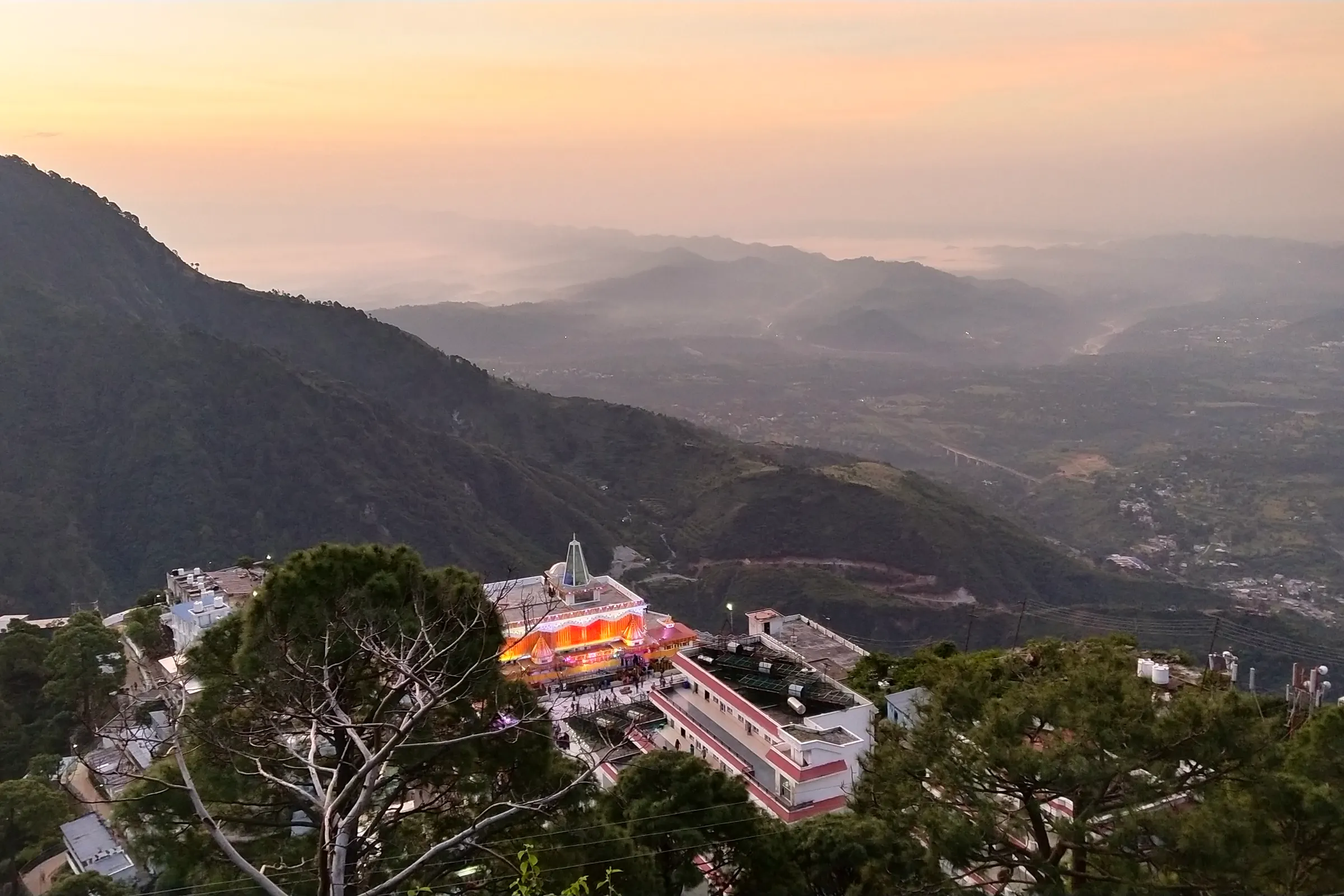
Katra is a town in Reasi district, Jammu. Kashmir Travel Guide is an independent travel guide to Kashmir, Jammu and Ladakh, published at kashmirtravelguide.co.in, and this is its entry for Katra.
This Katra travel guide covers the base town for the Vaishno Devi yatra in Reasi district: how the 12 km track to the shrine works, the helicopter, battery-car and ropeway alternatives, the yatra registration card everyone needs, when the crowds peak, and how to reach Katra from Jammu by rail and road.
Summary
In short: plan 1–2 days in Katra, come between All year, arrive by air or rail.
| Also written | Katra Vaishno Devi, Katra Reasi, Shri Mata Vaishno Devi Katra |
|---|---|
| Coordinates | 32.9925° N, 74.9318° E Directions ↗ |
Published Last reviewed How this entry is checked
Things to do in Katra
Katra is a town of about 9,000 people at 875 m, some 42 km north of Jammu, which exists for one purpose: it is the starting point for the pilgrimage to the Vaishno Devi shrine in the Trikuta hills above it. The Shri Mata Vaishno Devi Shrine Board, which has run the shrine since 1986, counted around 9.5 million pilgrims in 2023, which makes this by far the most visited destination in Jammu and Kashmir. Everything in Katra, from the hotels and dhabas to the pony stands and the RFID counters, is organised around the yatra, and the town is open and busy in every month of the year.
Walk the track to the Bhawan
The classic way up is on foot: about 12 km from the Banganga check-post at the edge of town to the Bhawan, the shrine complex at roughly 1,585 m. The path is paved, lit and lined with stalls and shelters the whole way. The landmarks in order are Banganga, Charan Paduka, Ardhkuwari (the halfway cave, about 6 km up), Sanjichhat (the high point, with the helipad) and the Bhawan. Most people take four to six hours up and less down; many walk overnight to avoid the heat and reach the shrine for the morning. Ponies, palanquins and porters are licensed at the base and charge published rates; agree the destination before you set off.
The shrine and the holy cave
The darshan is in a natural cave about 30 m long, where pilgrims wade through a shallow stream to the three rock forms, the pindis, that represent the goddess. On busy days the original cave is closed and the darshan is through a cut tunnel beside it; the queue is managed by the yatra card. From the Bhawan a second, shorter track leads up to the Bhairon temple, the traditional end of the yatra; since 2018 a ropeway has carried pilgrims up in a few minutes, running through the day.
Helicopter, battery car and other shortcuts
Helicopters fly from the Katra helipad to Sanjichhat, from where the Bhawan is about 2.5 km on foot or by battery car; the seats are limited, sell out weeks ahead for holidays, and are grounded by weather. Battery cars also run on the Ardhkuwari–Bhawan stretch via the newer Himkoti track, which is the gentler route for those who find the older path steep. All of these are booked through the Shrine Board's own portal; treat any other seller as a middleman at best.
Katra itself
The town's bazaar sells dry fruit, woollens and the red chunris and cholas offered at the shrine. Beyond the yatra, Katra is the base for Shiv Khori, the cave shrine about 80 km away, and for a day at the Chenab railway bridge and Salal lake on the Reasi side.
Best time to visit Katra
Katra is a year-round destination: the yatra runs every day of the year and the town never closes. The best time to visit depends on whether you want a comfortable walk or a festive one.
- October to March: the most comfortable months for the climb, with cool days; December and January nights on the track are cold, and the Bhawan can see snow. The Navratri festivals in late September–October and again in March–April are the peak crowds, with waits of many hours for darshan.
- April to June: hot in Katra by afternoon, so walk at night or at dawn; the school-holiday weeks are very busy.
- July to September: the monsoon. The track stays open but is wet and prone to closures for landslides in heavy rain, and helicopters are often grounded.
- Christmas and New Year: a short, intense peak; book rooms and shortcuts well ahead.
Plan the yatra, not just the trip
The one thing every visitor must have is the yatra registration: a free RFID card issued at the counters in Katra or booked online in advance through the Shrine Board, without which nobody passes the Banganga gate. Book helicopters, battery cars, the ropeway and Shrine Board rooms on the same portal. Allow a full day for the yatra on foot and a night in Katra either side; two nights makes it unhurried. Shrine Board rooms and dormitories exist in Katra, at Ardhkuwari, Sanjichhat and the Bhawan itself; private hotels in Katra range from pilgrim lodges to large resorts.
How do you get to Katra?
Working out how to reach Katra is easy, because the town has its own railway station and sits at the end of a good road from Jammu.
By rail: Shri Mata Vaishno Devi Katra station, opened in 2014, is served by direct trains from Delhi and other cities, and since 2025 by the Vande Bharat services across the Chenab bridge to the Kashmir Valley; the station is about 2 km from the town centre. By air: Jammu Airport, about 50 km and 1½ hours by road. By road: from Jammu the drive is about 42 km via Domel; buses and shared taxis leave Jammu's bus stand and railway station through the day.
From the Kashmir side, Katra is on the Jammu–Srinagar railway line, so a pilgrim trip can be combined with a valley holiday; our Srinagar guide covers the valley end. Jammu city is the natural overnight stop for anyone arriving late by air.
What should you know before visiting Katra?
These Katra travel tips assume you are walking the track at least one way.
- Register first. Get the yatra card before you do anything else; it is checked at the gate and again at the Bhawan.
- Start early or walk at night. The path is lit all night; a dawn start beats the heat in summer.
- Travel light. Leave luggage at the hotel or the cloakrooms; carry water, a torch and a warm layer for the top.
- Wear walking shoes with grip; the paved path is steep and slippery when wet.
- Leather items, phones and cameras are not allowed inside the Bhawan; free cloakrooms at the top take them before the darshan queue.
- Use only the Shrine Board's booking site for helicopters and rooms; agents charge more and sometimes hold nothing.
- Carry cash for ponies, prasad and stalls, and keep receipts for pony and palki hire.
Common questions
How long does the Vaishno Devi yatra take on foot?
Plan for four to six hours up from Banganga to the Bhawan and three to four down, plus time in the queue and at the cave. Most pilgrims do the whole yatra in twelve to twenty hours door to door from Katra, or split it with a night at the top.
Can I skip the walk entirely?
Nearly. A helicopter to Sanjichhat leaves about 2.5 km, which a battery car can cover; the ropeway then takes you to the Bhairon temple. The cave itself is always on foot, and all three services are weather-dependent and heavily booked.
Is Katra worth a day beyond the yatra?
If you have one: Shiv Khori's cave shrine is a full day out, and the Chenab bridge viewpoint near Reasi is a short excursion. Most visitors, though, come for the shrine and move on to Jammu or the Kashmir Valley.
Where does this information come from?
This guide is written from official and locally verified sources, and leaves a figure out rather than guessing at it. Every entry shows the day it was published and the day a person last checked it. For anything that moves with the day, go to the authority that publishes it:
- Flights and airport information: Airports Authority of India
- Train times and availability: Indian Railways
- Weather warnings and forecasts: India Meteorological Department
- This guide on mobile: App Store and Google Play