
Jammu is a city in Jammu. Kashmir Travel Guide is an independent travel guide to Kashmir, Jammu and Ladakh, published at kashmirtravelguide.co.in, and this is its entry for Jammu.
This Jammu travel guide covers the winter capital and the gateway city on the Tawi: the Dogra temples and palaces, Bahu Fort and its gardens, how the city connects to Katra, Patnitop and the Kashmir Valley, when the heat matters, and how to reach Jammu by air, rail and road.
Summary
In short: plan 1–2 days in Jammu, come between All year, arrive by air or rail.
| Also written | Jammu City, Jammu Tawi, City of Temples, जम्मू, جموں |
|---|---|
| Coordinates | 32.7186° N, 74.8581° E Directions ↗ |
Published Last reviewed How this entry is checked
Things to do in Jammu
Jammu is the largest city of the Jammu region and the union territory's winter capital, at about 300 m on the banks of the Tawi where the Shivalik hills meet the plains. Around half a million people live in the city proper. For most travellers it is the gateway: the airport, the Jammu Tawi railway station and the bus stand feed the Vaishno Devi pilgrimage at Katra, the hill road to Patnitop and the highway to the Kashmir Valley. Give it a day and the "city of temples" repays it, with a cluster of nineteenth-century Dogra temples, two palaces and a fort above the river.
The Dogra temples
The Raghunath temple in the old bazaar is the largest temple complex in northern India: seven shrines to the deities of the Ramayana, with gold-plated spires, begun by Maharaja Gulab Singh around 1835 and completed by his son Ranbir Singh by 1860, and a library of some 6,000 manuscripts. The Ranbireshwar temple nearby, built between 1863 and 1878, has a central black-stone lingam about 2.5 m high, said to be the largest in India, with hundreds of smaller ones set around it. The Peer Kho cave temple on the riverbank is older, associated with a sixteenth-century ascetic, and pleasantly cool. Security at the Raghunath temple is tight; bags and cameras are checked.
Bahu Fort and Bagh-e-Bahu
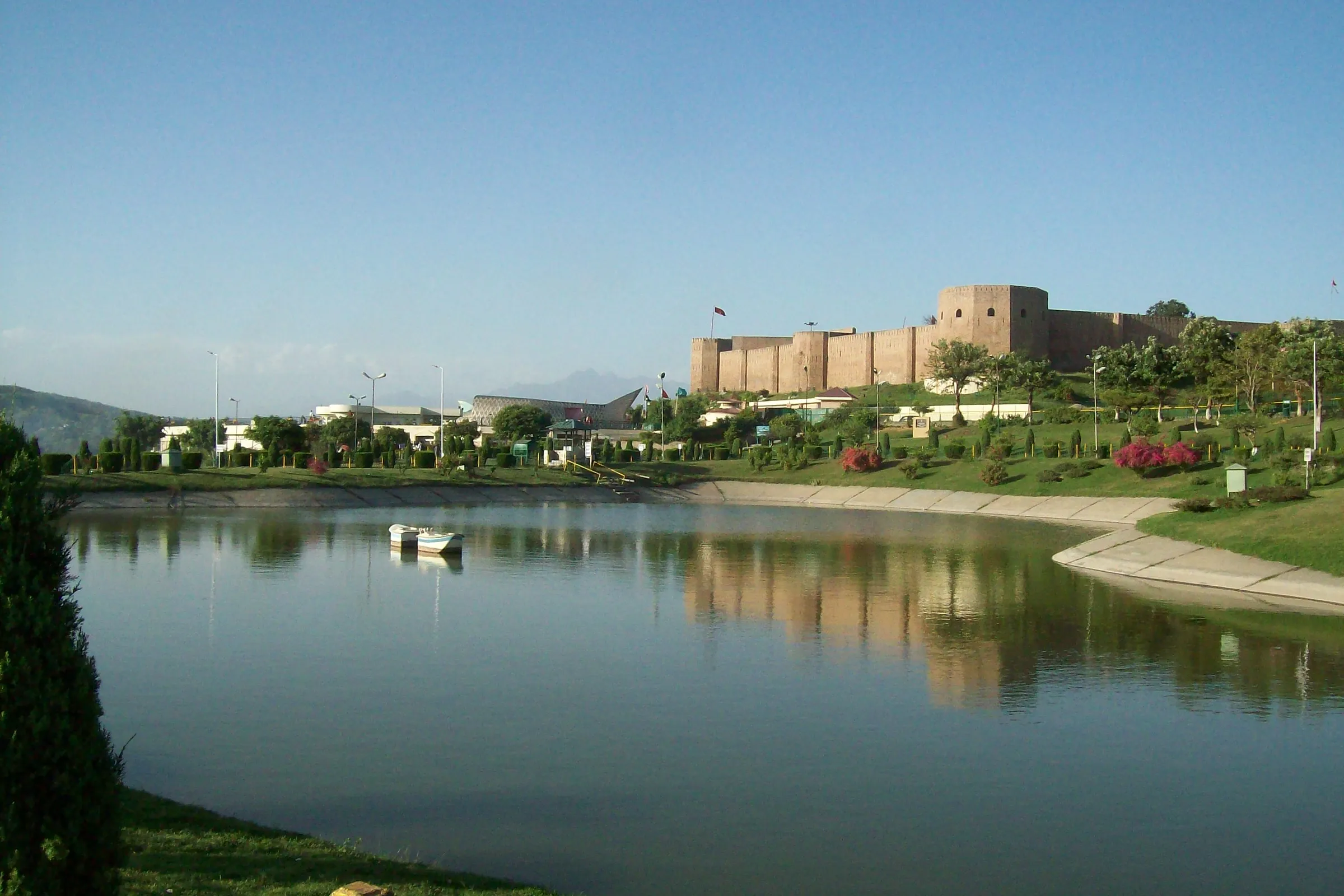
Across the Tawi on the rocky left bank, about 5 km from the centre, Bahu Fort stands on the site of the oldest settlement in the city, traditionally founded by Raja Bahu Lochan, and was rebuilt in its present form by the Dogra rulers in the nineteenth century. Inside is the temple of Bawe Wali Mata, the goddess Kali, whose worship is second in the region only to Vaishno Devi's; Tuesdays and Sundays are the busy days. Below the walls the terraced garden of Bagh-e-Bahu, with an aquarium in the shape of a fish and a small boating lake, is the city's best evening walk, with the river and the old town spread out beneath.
The palaces and the museum
Mubarak Mandi, the sprawling old palace of the Dogra maharajas above the river, is a mix of Rajasthani, Mughal and European styles under long restoration; parts house the Dogra art museum. Amar Mahal, the red-brick palace built for Raja Amar Singh in the style of a French château, is a museum with a golden throne, pahari miniatures and a library, on a bluff with a view down the Tawi. Both are a short taxi ride from the centre.
Out of the city
Jammu is the base for day trips: Mansar and Surinsar lakes to the east, Akhnoor's fort and ghats on the Chenab to the west, and the Katra road north. Katra itself is about 42 km, and Patnitop about 112 km.
Best time to visit Jammu
Jammu is a year-round city; as the winter capital it is at its busiest from November to April, and that is the best time to visit, when the days are mild and the temples and gardens are pleasant to walk.
- October to March, the best time: cool, dry days, the winter capital in session, Navratri and Diwali crowds at the temples, and the Lohri bonfires in January.
- April to June: hot, with May and June highs above 40 °C; sightseeing is an early-morning and evening affair, and most visitors pass through to the hills.
- July to September: the monsoon, humid with heavy downpours; the Tawi runs high and the hill roads can close.
Gateway or destination?
For most journeys Jammu is a night at either end: arrive by air or the overnight train, see the fort and a temple in the evening, and leave for Katra or the valley in the morning. Two nights allows the palaces and a lake trip. The city has the region's widest choice of hotels, from railway-station lodges to business hotels near the airport, and the best restaurants for Dogri food: rajma-chawal, kaladi cheese and the sweet shops of the old bazaar.
Photo credit
Hero photograph: Tejan gupta, CC BY-SA 4.0, via Wikimedia Commons; cropped and resized.

How do you get to Jammu?
Working out how to reach Jammu is the easiest part of any Jammu and Kashmir trip: it has the region's main airport, its main railway junction and the highway from the plains.
By air: Jammu Airport (Satwari) is inside the city, about 8 km from the centre, with around 30 flights a day to Delhi, Mumbai, Srinagar and other cities. By rail: Jammu Tawi station is the historic terminus, with express trains from across India; many now continue to Katra and, since 2025, over the Chenab bridge to the Kashmir Valley. By road: the national highway from Pathankot and Delhi; Katra is 42 km, Patnitop 112 km, Srinagar about 265 km via the tunnels.
Taxis, auto-rickshaws and app cabs cover the city; buses and shared taxis to Katra, Udhampur and the valley leave from the general bus stand. Our Srinagar guide covers the valley end of the highway.
What should you know before visiting Jammu?
These Jammu travel tips are for a city that is a gateway first and a destination second.
- Plan the temples for morning or evening in summer; midday is too hot to enjoy them.
- Dress modestly and remove shoes at temples; leather and cameras are not allowed inside the Raghunath complex, and security checks are thorough.
- Keep a photocopy of identification and your onward tickets; the railway station and airport both check them.
- Book the overnight trains and the Vande Bharat early; seats to Katra and the valley sell out for holidays.
- Try the Dogri food: rajma from Bhaderwah, kaladi, ambal and the sweets of the old bazaar.
- Carry cash for temples and auto-rickshaws, and agree fares before getting in.
- Take litter away, and do not swim in the Tawi.
Common questions
How many days do you need in Jammu?
One full day covers the Raghunath and Ranbireshwar temples, Bahu Fort and an evening at Bagh-e-Bahu. Add a second for Amar Mahal, Mubarak Mandi and a trip to Mansar lake.
Is Jammu worth a stop on the way to Vaishno Devi?
Yes, for a night: the fort and the Bawe Wali Mata temple are a natural prelude to the yatra, and the city's hotels and restaurants are better value than Katra's in peak weeks.
When is Jammu too hot?
May and June, when afternoons pass 40 °C. The city is fine year-round for a transit night, but for sightseeing prefer October to March.
Where does this information come from?
This guide is written from official and locally verified sources, and leaves a figure out rather than guessing at it. Every entry shows the day it was published and the day a person last checked it. For anything that moves with the day, go to the authority that publishes it:
- Flights and airport information: Airports Authority of India
- Train times and availability: Indian Railways
- Weather warnings and forecasts: India Meteorological Department
- This guide on mobile: App Store and Google Play