
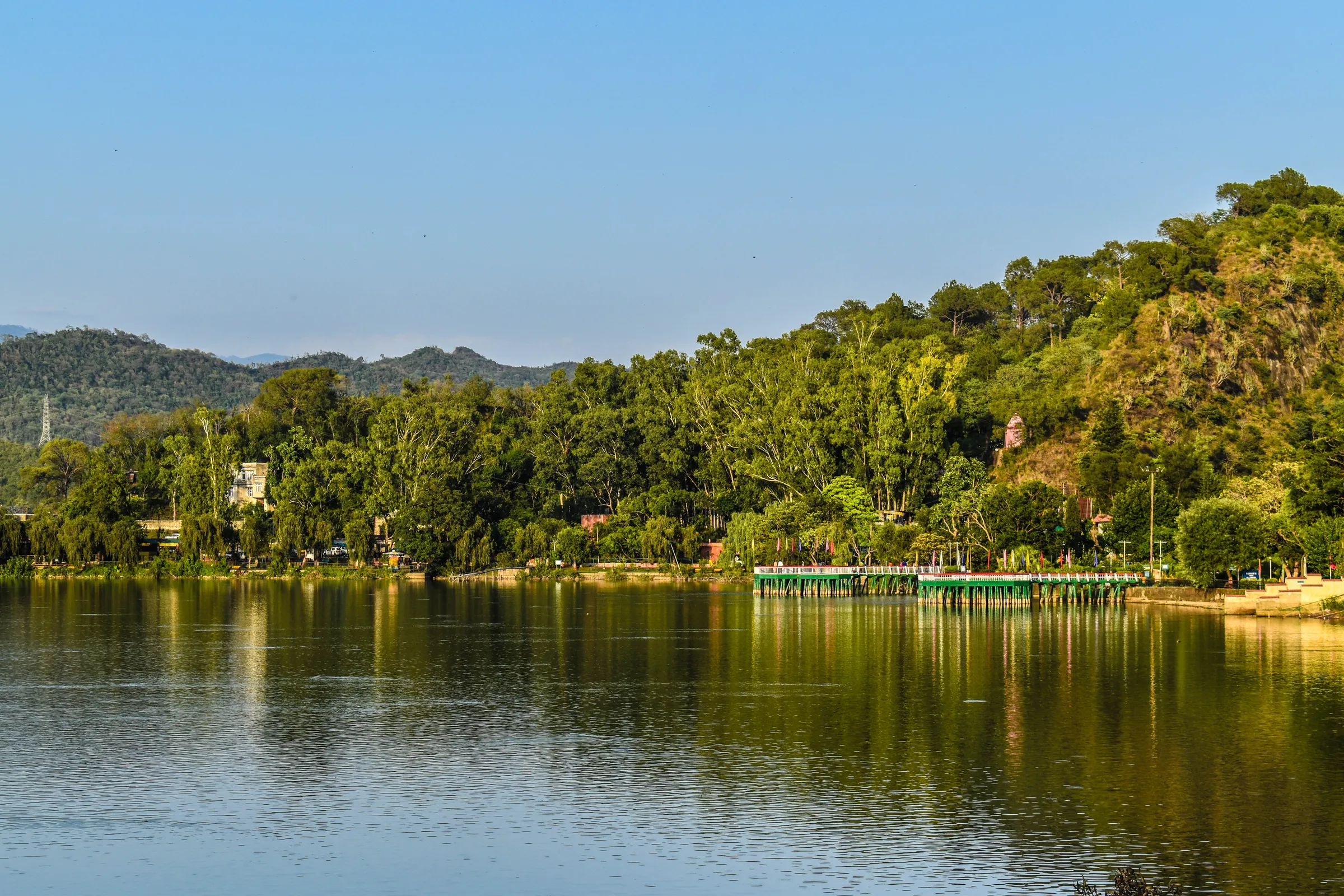
Mansar Lake is a lake in Samba district, Jammu. Kashmir Travel Guide is an independent travel guide to Kashmir, Jammu and Ladakh, published at kashmirtravelguide.co.in, and this is its entry for Mansar Lake.
This Mansar Lake travel guide covers the twin Shivalik lakes east of Jammu, Mansar and the smaller Surinsar: the temple and the tortoises, boating and the lakeside walk, the wildlife sanctuary, the legend that links the two, when to come, and how to reach Mansar Lake from Jammu.
Summary
In short: plan 1 day in Mansar Lake, come between All year, arrive by air or rail.
| Also written | Mansar, Manisar, Surinsar-Mansar Lakes |
|---|---|
| Coordinates | 32.6972° N, 75.1449° E Directions ↗ |
Published Last reviewed How this entry is checked
Things to do in Mansar Lake
Mansar is a lake about a kilometre across in the low Shivalik hills, 62 km east of Jammu in Samba district, ringed by forest and a paved path. With Surinsar, its smaller twin 24 km from Jammu on the other side of the ridge, it has been a Ramsar wetland of international importance since 2005. Locally it is a sacred lake, the "Manisar" of the Mahabharata legend in which Babruvahana, son of Arjuna, reached the underworld through Surinsar and came up here with the jewel of the serpent king. It is the Jammu region's easy day out: a temple, a boat, a walk and lunch.
The Sheshnag temple and the lake circuit
On the eastern bank the shrine to Sheshnag, the serpent on which Vishnu rests, is marked by a boulder wrapped in iron chains; newly married couples and parents with newborns come to circle the lake for blessing, and a circuit of the shore, about 4 km on the paved path, is the thing to do here. Tortoises and large fish crowd the ghats where visitors feed them. Smaller temples to Umapati Mahadev and Narsimha stand back from the water.
Boating and the wildlife sanctuary
The tourism department runs paddle and row boats from the ghat in season. Around the lake the Surinsar–Mansar wildlife sanctuary holds spotted deer, nilgai and, in winter, cranes and migratory ducks; a small deer park near the entrance is the reliable place to see them. Early morning and dusk are the times for birds.
Surinsar
Surinsar, on the road back towards Jammu, is quieter and greener, a lotus-covered lake in a fold of forest with no boating or feeding; it is the place for a walk and a picnic rather than a temple visit. The two lakes can be done in one loop from Jammu: out to Mansar, back by Surinsar.
Best time to visit Mansar Lake
Mansar Lake is a year-round destination and busy with local visitors in every month; the best time to visit is October to March, when the days are cool and the migratory birds are on the water.
- October to March, the best time: mild days, clear light, winter ducks and cranes; the Baisakhi fair in mid-April closes the season with crowds and a mela on the banks.
- April to June: hot on the plains by midday; come early, walk the circuit before ten, and leave the afternoon to the boat sheds.
- July to September: the monsoon fills the lake and greens the hills; humid, with showers, and the sanctuary at its lushest.
A day from Jammu
Mansar is a half-day or a lazy full day from Jammu: an hour and a half out, the temple and the circuit, a boat, lunch at the tourism department's cafeteria or the dhabas, and back via Surinsar. There are tourism-department huts and a couple of hotels for anyone who wants the lake at dawn. It also makes a stop on the road between Jammu and Udhampur, and a gentle contrast to the yatra at Katra.
Photo credit
Hero photograph: Pranavmagotra03, CC BY-SA 4.0, via Wikimedia Commons; cropped and resized.

How do you get to Mansar Lake?
Working out how to reach Mansar Lake is simple: it is a 62 km drive east of Jammu on a good road, about 1½ hours.
By road: from Jammu via the Samba or the Surinsar road; buses and shared taxis run from Jammu's bus stand to Mansar through the day. Surinsar is 24 km from Jammu by the bypass road and about 20 km from Mansar. By rail: Jammu Tawi, or Samba on the Pathankot line, about 30 km. By air: Jammu Airport, about 65 km.
A hired car makes the two-lake loop easy; Jammu city is the base.
What should you know before visiting Mansar Lake?
These Mansar Lake travel tips are for an easy day at a sacred lake.
- Walk the circuit clockwise, as pilgrims do, and keep to the path; the banks are steep and slippery in places.
- Do not swim; the lake is sacred and deep, and swimming is prohibited.
- Feed the fish and tortoises only with the puffed rice sold at the ghat, not bread or wrappers.
- Go early in summer; the path has little shade after ten.
- Boats run to a timetable and stop in rough weather; ask at the ghat rather than assuming.
- Carry cash for the temple, boats and dhabas.
- Take litter away, and keep noise down near the temple and the deer park.
Common questions
Can you swim or boat on Mansar Lake?
Boating, yes, from the tourism department's ghat in season. Swimming is not allowed; the lake is sacred and the banks drop away steeply.
Is Surinsar worth the detour?
Yes, if you have a car: it is quieter and prettier than Mansar, with lotus on the water and no crowds, and it lies on the way back to Jammu.
Why do couples visit Mansar?
Tradition holds that newly married couples who circle the lake three times are blessed, and the Sheshnag shrine on the bank is where they and new parents pray; you will see them on any weekend.
Where does this information come from?
This guide is written from official and locally verified sources, and leaves a figure out rather than guessing at it. Every entry shows the day it was published and the day a person last checked it. For anything that moves with the day, go to the authority that publishes it:
- Flights and airport information: Airports Authority of India
- Train times and availability: Indian Railways
- Weather warnings and forecasts: India Meteorological Department
- This guide on mobile: App Store and Google Play