
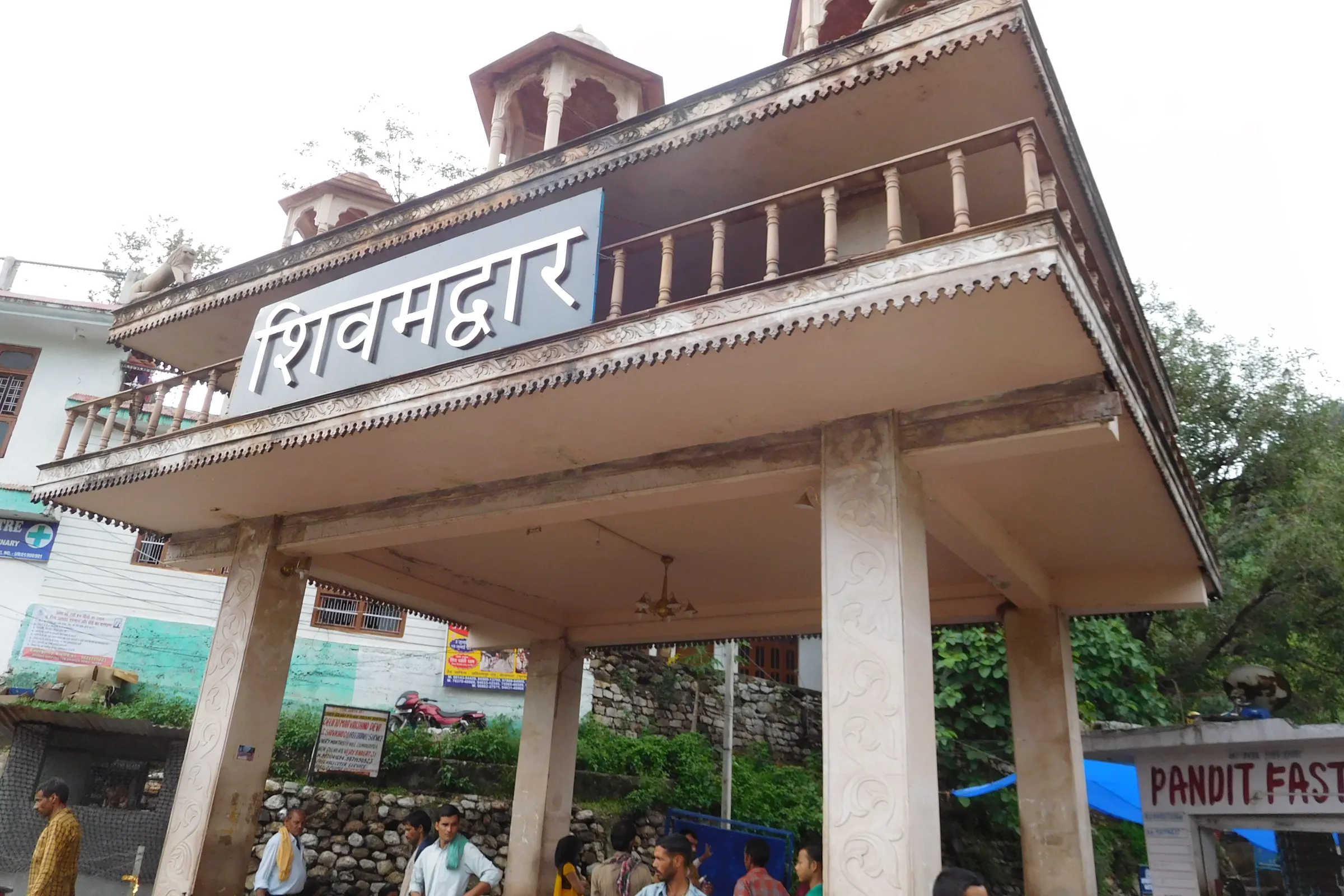
Shiv Khori is a town in Reasi district, Jammu. Kashmir Travel Guide is an independent travel guide to Kashmir, Jammu and Ladakh, published at kashmirtravelguide.co.in, and this is its entry for Shiv Khori.
This Shiv Khori travel guide covers the cave shrine of Shiva in the hills of Reasi district: the 3 km track from Ransoo, what the cave is like inside, the Mahashivratri fair, when to go, and how to reach Shiv Khori from Katra and Jammu.
Summary
In short: plan 1 day in Shiv Khori, come between All year, arrive by air or rail.
| Also written | Shivkhori, Shiv Khori Ransoo |
|---|---|
| Coordinates | 33.1742° N, 74.6165° E Directions ↗ |
Published Last reviewed How this entry is checked
Things to do in Shiv Khori
Shiv Khori is a natural cave about 200 m long in a limestone hillside above the village of Ransoo, in the Pouni block of Reasi district, where a self-formed lingam is worshipped as Shiva. The Shiv Khori Shrine Board, set up in 2003 under the Divisional Commissioner of Jammu, runs the track and the facilities, and by the mid-2010s the shrine was drawing around two million pilgrims a year, most of them from outside the region. It is the second great pilgrimage of Reasi after Vaishno Devi, and the two are usually done together.
The track from Ransoo
From the base camp at Ransoo a paved path climbs about 3 km through the hills to the cave mouth, with shelters, water points and stalls along the way; most people take an hour to an hour and a half up. Ponies and palanquins are available at the base for those who need them. The path passes a small waterfall and opens views back down the valley.
Inside the cave
The first chamber is broad enough for a few hundred people. From there the cave narrows to about a metre wide and two or three metres high for the passage to the sanctum, where the natural lingam stands about a metre high with a constant drip of water from the rock above it, and the ceiling is shaped, to the faithful, like a snake's hood; the stone formations around it are read as the whole pantheon. The passage is close and can be humid; the darshan is quick, and on ordinary days there is little queue. Local tradition holds that the cave continues to Amarnath, which no one has tested.
Reasi and the Chenab bridge
Shiv Khori is combined with the district's other sights on the same road: the Chenab railway bridge near Bakkal, the world's highest railway arch, has a viewpoint on the Reasi road, and Salal dam's lake and the ruined Bhimgarh fort above Reasi town make a full day of it before or after the cave.
Best time to visit Shiv Khori
Shiv Khori is a year-round shrine and open every day; the best time to visit is October to March, when the walk is cool, with the Mahashivratri fair in February or early March as the great occasion.
- October to March, the best time: cool days for the climb; the three-day Mahashivratri mela brings tens of thousands of pilgrims and a fair at Ransoo, when the queue for the cave runs to hours.
- April to June: hot at Ransoo by midday; walk early. School holidays bring family groups.
- July to September: the monsoon, when the path is wet and the road from Katra can be cut by landslides; the waterfall on the track is at its best.
The Katra and Shiv Khori day
Most visitors come from Katra after the Vaishno Devi yatra: an early start, the drive through Reasi, the walk and darshan, and back to Katra or on to Jammu by evening. It is a full day but not a hard one. Ransoo has pilgrim lodges and Shrine Board accommodation for anyone who wants the cave at opening time or is coming for the mela.
Photo credit
Hero photograph: Itzseoprasoon, CC BY-SA 4.0, via Wikimedia Commons; cropped and resized.

How do you get to Shiv Khori?
Working out how to reach Shiv Khori means getting to Ransoo, the base village, which has no railway and is reached by road from Katra or Jammu.
By road: Ransoo is about 80 km from Katra via Reasi and about 140 km from Jammu, 2½ to 3½ hours on hill roads; taxis and shared taxis run from Katra and Reasi, and buses from Jammu. By rail: Shri Mata Vaishno Devi Katra, about 80 km, or Reasi station on the new line to the valley, which is closer to Ransoo; check current services. By air: Jammu Airport, about 140 km.
A hired car from Katra for the day is the usual arrangement; agree whether it includes the Chenab bridge viewpoint. Jammu city is the alternative base.
What should you know before visiting Shiv Khori?
These Shiv Khori travel tips are for a cave shrine reached by a short hill walk.
- Start early; the drive is longer than the walk, and the cave is cooler and emptier before noon.
- Wear shoes with grip and carry a torch; the cave floor is wet and the passage is dark in places.
- The passage to the sanctum is narrow; anyone uneasy in confined spaces can stop at the first chamber, which is open and lit.
- Leather items, cameras and phones are not taken into the cave; cloakrooms at the mouth hold them.
- Carry water and cash for the track; stalls sell prasad and snacks but little else.
- Ponies and palkis have published rates at the base; agree the return before you mount.
- Take litter away, and respect the queue on mela days.
Common questions
Do I need to be fit for Shiv Khori?
Not especially. The climb from Ransoo is short and paved, with shelters to rest in, and anyone who prefers not to walk can hire a pony or a palanquin at the base and ride to the cave mouth.
Is the cave difficult for older people or children?
The walk is manageable with a pony if needed. Inside, the passage to the sanctum is about a metre wide; those who find that daunting can pray in the first chamber, which is broad and open.
Can Shiv Khori and Vaishno Devi be done in one trip?
Yes; the usual pattern is the Vaishno Devi yatra from Katra one day and Shiv Khori as a day trip the next, with a night at Katra or Ransoo between.
Where does this information come from?
This guide is written from official and locally verified sources, and leaves a figure out rather than guessing at it. Every entry shows the day it was published and the day a person last checked it. For anything that moves with the day, go to the authority that publishes it:
- Flights and airport information: Airports Authority of India
- Train times and availability: Indian Railways
- Weather warnings and forecasts: India Meteorological Department
- This guide on mobile: App Store and Google Play