
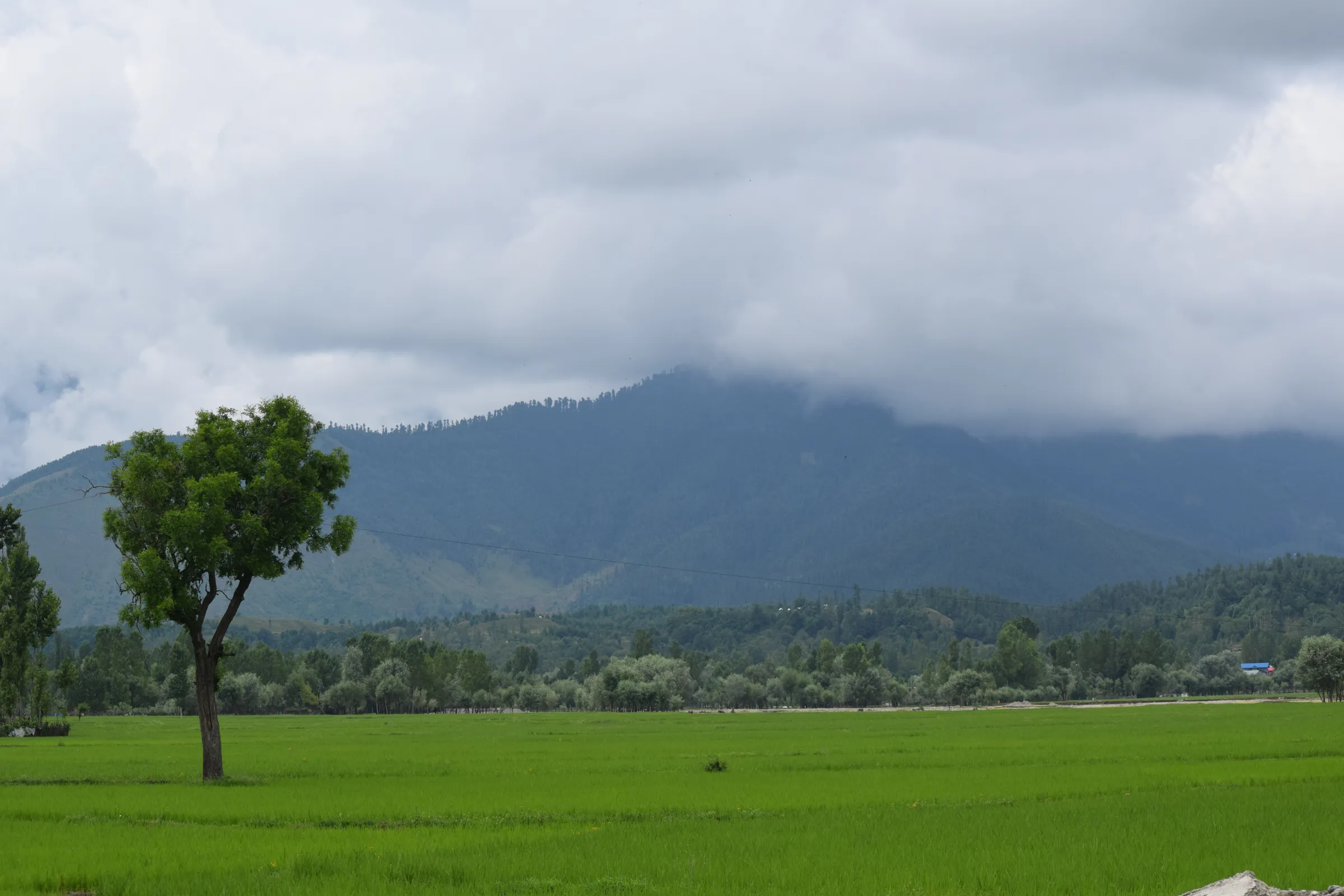
Lolab Valley is a valley in Kupwara district, Kashmir Valley. Kashmir Travel Guide is an independent travel guide to Kashmir, Jammu and Ladakh, published at kashmirtravelguide.co.in, and this is its entry for Lolab Valley.
This Lolab Valley travel guide explores a rural valley in Kashmir’s Kupwara district: forest-fringed fields, village stops and the Lalkul stream. Plan a manageable route, choose where to stay and understand what to confirm before travelling.
Summary
In short: plan 1–2 days in Lolab Valley, come between All year, arrive by air or rail.
| Also written | Lolab |
|---|---|
| Coordinates | 34.5000° N, 74.3667° E Directions ↗ |
Published Last reviewed How this entry is checked
What makes a visit worthwhile?
Lolab rewards travellers interested in the countryside between attractions. Cultivated land, settlements and wooded hills form the setting; it is not a single enclosed sightseeing spot. The district administration describes a valley extending roughly 25 km, so a map pin is only an orientation point, not a complete itinerary.
Come for a slower village-and-landscape visit rather than expecting a resort activity menu. Decide which part of the valley interests you before booking a vehicle: time spent on a short walk or a relaxed stop can be more worthwhile than driving between every name on a tourism list.
Things to do in Lolab Valley
Build a village outing around Chandigam
Chandigam is among the destinations named by the district tourism authority and has hutments listed on its accommodation page. It makes a useful place to investigate when planning a scenic visit or an overnight base. Confirm the precise meeting or accommodation location, then ask locally about suitable short walks rather than choosing an unmarked forest track from a satellite image.
For a first outing, pair a village stop with time in the surrounding countryside. Keep the plan small enough to enjoy it: a long list of villages does not tell you whether there is a public viewpoint, somewhere to eat or a suitable place to park at each one.
Explore the landscape respectfully
The Lalkul, also called Lahwal, runs through the valley. Look for permitted stopping places from which to appreciate fields, trees and the wider landscape without entering cultivated plots. Farmland is a workplace, not an open-access picnic ground. Ask before entering an orchard or photographing people, and leave gates and paths as you found them.
Carry any picnic supplies back out, including food wrappers. If you want a longer forest outing, arrange knowledgeable local guidance and establish the route and return plan in advance; a scenic road stop and a trek need different preparation.
Consider Lov Nag or a cultural stop
The district identifies Lov Nag at Anderbaugh and notes Varnow’s association with scholar Allama Anwar Shah Kashmiri. These can give a visit more context than scenery alone. Ask whether the particular site welcomes visitors on your chosen day and what etiquette is expected. Do not assume that every named landmark has an organised visitor facility.
Treat Kalaroos as a separate, planned excursion
Kalaroos is associated with Satbaran, or “seven doors,” and caves. If this interests you, agree on the exact site and approach with your driver or guide. Stories about passages reaching distant countries are folklore, not established route information. This guide does not recommend entering unassessed caves or treating them as a self-guided through-walk.
Best time to visit Lolab Valley
For general sightseeing, consider May to September as a starting planning window. This is our editorial recommendation for an outdoor visit, not an official opening season. The best time to visit Lolab Valley also depends on whether you value greener countryside, a particular agricultural season or quieter time at a confirmed stay.
Spring and autumn visits need date-specific planning: ask what the landscape and local services are like during your actual travel week rather than relying on photographs taken in another season. Do not promise yourself blossom or harvest scenes without checking with a local host.
In winter, make accommodation and transport confirmation the first task, not the last. Rain or snow can change an outing’s suitability; keep a simpler alternative and avoid making a remote excursion essential to a tightly timed trip. A forecast for Srinagar should not replace a check for the area you will visit.
Day visit or overnight stay?
Allow one day for a focused outing from a suitable nearby base, or consider two days with one night if you want a less hurried introduction. These are suggested trip lengths, not a promise that the entire valley can be covered in that time.
Coming from Srinagar, assess the return journey before adding extra stops. For a day visit, agree on one main destination and a small number of optional stops; make clear that the optional ones can be dropped. An overnight plan gives you more flexibility but only helps if your accommodation and meals are arranged.
The official accommodation directory lists hutments at Lalpora, Chandigam and Devar. A listing is not confirmation of availability or current operation. Contact the operator about your dates, room facilities, heating when needed, food and check-in arrangements before paying. If those cannot be confirmed, reconsider the overnight plan rather than arriving expecting a room.
Photo credit and sources
Hero: Lolab Valley-Kupwara by Eshankaul007, via Wikimedia Commons, CC BY-SA 4.0. Taken July 2015; resized and converted to WebP. The adapted image is offered under the same licence.

Destination facts: Kupwara district’s Lolab guide and places of interest. Accommodation references: district accommodation directory. Practical recommendations are editorial synthesis, not claims of a personal site visit.
How do you get to Lolab Valley?
When planning how to reach Lolab Valley, separate the journey to Kupwara from the onward trip to your chosen village. Kupwara town is the district’s identified gateway; the final distance depends on where you intend to go.
The district tourism page gives approximately 114 km for the journey from Srinagar to the valley, but does not define every endpoint. Treat that as broad orientation, not a door-to-door measurement. Get a route estimate for your actual departure address and destination, and allow for traffic, stops and changing road conditions.
Srinagar Airport is the air gateway. Baramulla is the railhead identified by the district for onward travel towards Kupwara; check current railway services for your starting point and arrange the road connection separately. No direct train into the valley is implied.
For public transport, confirm the current service, transfer points and last return option locally. For a hired vehicle, get a quote that identifies the villages, waiting time and return arrangement. If your trip begins with time in the capital, use our Srinagar guide to plan that part of the journey.
What should you know before visiting Lolab Valley?
These Lolab Valley travel tips are for a village-based sightseeing trip, where a clear destination and a few advance arrangements matter more than booking a long activity list.
- Share the names and locations of your intended stops with the driver; do not rely on “take us to Lolab” to define the outing.
- Ask where you will eat and find toilets, particularly when travelling with children or anyone who needs regular breaks.
- Carry layers, rain protection and footwear suited to uneven or muddy ground. Keep a change of shoes if you plan a walk before a long return drive.
- Agree on any guide or activity fee before starting. No unverified fare is presented here as an official rate.
- For reduced mobility, ask about the surface and distance between parking and the actual stop. A vehicle-accessible village does not establish step-free access everywhere.
Common questions
Is Lolab Valley the same place as Bangus Valley?
No. They are distinct destinations in Kupwara district. Check which valley a package actually covers; a shared district name does not mean the stops belong to one compact sightseeing circuit.
Can I pick fruit in the orchards?
Only with the owner's permission. Do not assume that visible fruit or an unfenced plot is available for visitors to pick. If a host offers an orchard visit, agree beforehand on access and whether any picking is included.
Is the hero photograph a picture of current conditions?
No. It is an archival landscape photograph from July 2015, identified by its contributor with the Lolab–Kupwara area. It illustrates the setting, not today's weather, crop stage or available facilities.
Where does this information come from?
This guide is written from official and locally verified sources, and leaves a figure out rather than guessing at it. Every entry shows the day it was published and the day a person last checked it. For anything that moves with the day, go to the authority that publishes it:
- Flights and airport information: Airports Authority of India
- Train times and availability: Indian Railways
- Weather warnings and forecasts: India Meteorological Department
- This guide on mobile: App Store and Google Play